
Licensure & Supervision

Clinical supervision isn’t just a requirement set by the Board of Social Work and Board of Behavioral Health and Therapy — it’s a meaningful investment in your growth and professional journey.
It offers a valuable chance to build a mentoring relationship with someone who will guide and support you in becoming a competent and confident clinician. Supervision provides the foundation and encouragement you need as you begin your career. Having a supervisor who is experienced, skilled, and genuinely supportive is crucial.
Imagine how your professional life might look if you had the essential knowledge, core values, practical skills, strong support, and a deep sense of confidence in your professional identity.
Throughout my career, I have had a mix of positive and dreadful experiences with supervisors, from those that supported my learning and gave me space to process events within sessions and how they impacted me to those who utilized supervision solely for administrative tasks. As a supervisor, I hope to create space to uphold high value of ethical practice, as well as support the clinician as a whole person. Sessions can include case conceptualization, note review and professional writing skills, career development skills, ethical decision-making model review for difficult interactions and discussion of bias, attraction, and the messy things that can leave us vulnerable to ethical violations.
Individual supervision (without billing under license): $60/hour
Group supervision: $80/2-hour session (Reduced rate of $40/session for members of underrepresented groups)
🗓️ 1st & 3rd Thursdays
🕚 11:00 AM–1:00 PM
Supervision is typically delivered electronically through eye-to-eye HIPPA compliant video calls via Simple Practice.
My current clinical practice focuses primarily on adults, with specialties including trauma, attachment, EMDR, somatic approaches, grief and loss, and perinatal mental health. Across my career, I have also provided supervision and clinical work with children, adolescents, families, couples, groups, and individuals, allowing for a broad range of perspectives and case consultation.
My supervision style emphasizes:
• Clinical competence and ethical practice (including differential diagnosis)
• Reflection and curiosity over perfection
• Trauma-informed and culturally responsive care
• Practical skill development
• Building confidence in your own clinical voice
Whether you're seeking consultation on complex cases, growing your therapeutic identity, or simply looking for a community of fellow clinicians, I'd love to connect.
I have completed my 30 hours of required supervision training in addition to maintaining 6 hours within each renewal period. I have supervised clinicians and interns for 12 years and am passionate about learning with those that come to supervision.
A Note About My Commitment to Inclusive Supervision
I am a white, cisgender woman who has benefited from privilege. I recognize that my lived experience is not universal, and I will make mistakes. When that happens, I am committed to listening without defensiveness, welcoming feedback, repairing when needed, and continuing to do my own work. My goal is to foster a supervision environment where all clinicians are treated with dignity, curiosity, and respect, and where learning includes honest conversations about culture, identity, power, and equity.
“Throughout my time working under Michelle’s supervision I felt supported and challenged to grow. Michelle has an ability to help guide in a way that is nurturing and focused on utilizing my strengths. She provided clear guidance when I had difficult questions or situations I needed extra support with. Her ability to listen and, provide constructive feedback has been invaluable in my professional development. I’m particularly grateful for her positive and encouraging attitude. After working with her, I feel confident in my ability to excel as I continue my career in social work.”
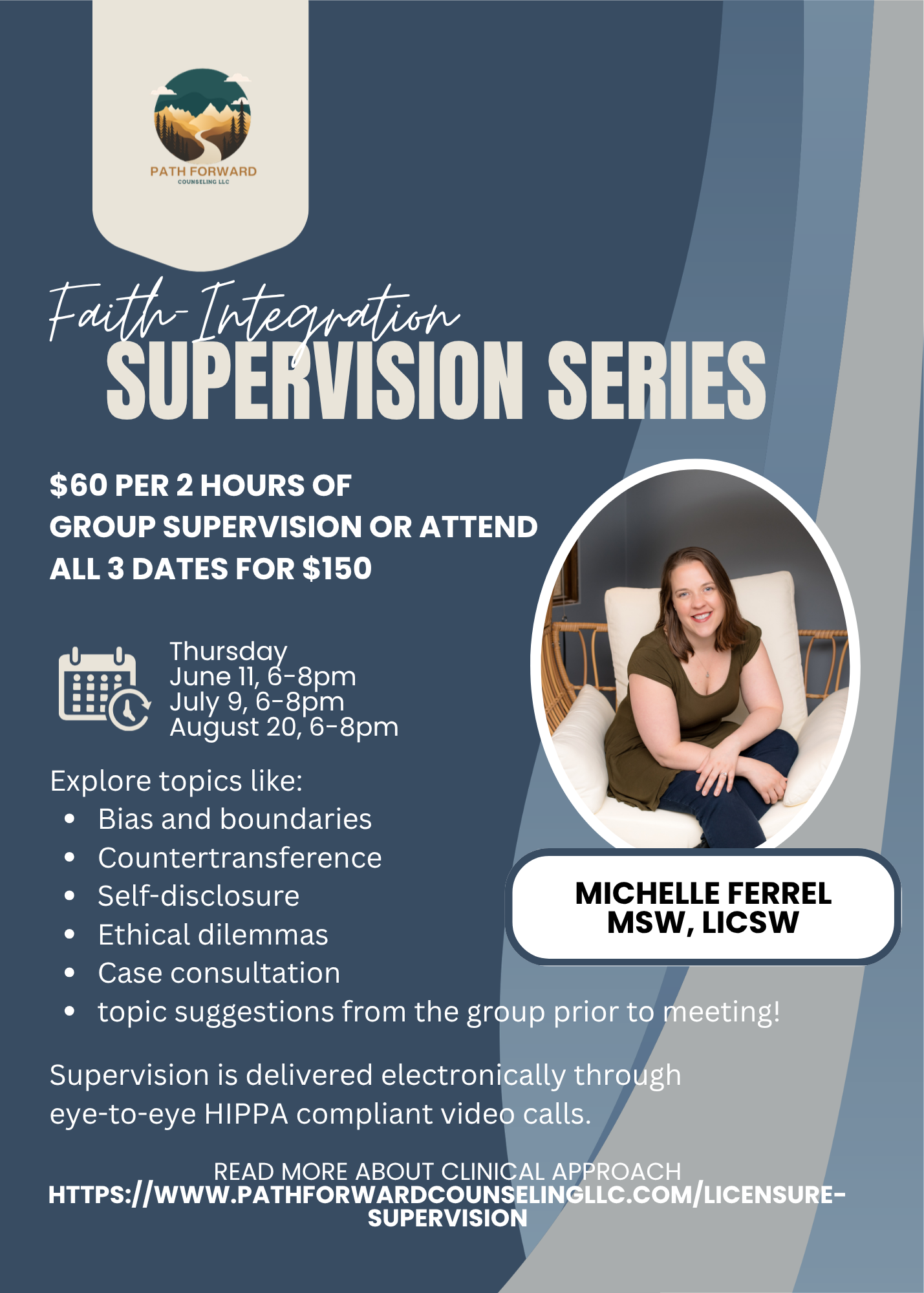
Want an opportunity to feel out my supervision style without a longer commitment? Hoping for a space to unpack challenges related to faith in a secular work setting?
This virtual clinical supervision group supports social workers in ethically integrating faith and spirituality into practice while maintaining client-centered care. It provides a reflective space for exploring personal beliefs, biases, and value conflicts, with an emphasis on self-awareness, respectful dialogue, and professional boundaries. Participants will engage in case consultation, guided discussion, and skill-building around appropriate use of faith-informed interventions and therapist self-disclosure. The group is structured, pre-planned with participant input, and limited in size. Sessions are paid in advance, offered individually or as a package, and include formal supervision documentation and verification.